

Let’s Talk Literacy: A Pediatric Speech-Language Pathologist’s Take on Reading
Written By: Grace Lawton, M.A, R-SLP
Registered Speech Language Pathologist
Speech, language and literacy are deeply connected, putting children with communication disorders at a greater risk for reading and writing difficulties compared to their peers (Schmitt & Tambyraja, 2015; Spracher, 2000).
Let’s Talk Literacy: The Basics
Reading is a complex process including both decoding (sounding out words in the text) and comprehension (understanding words in the text). Speech-Language Pathologists take a systematic approach to literacy intervention, breaking down the foundational steps of becoming a fluent reader using a structured hierarchy.
First, a child learns basic print concepts such as how to correctly orient a book, track text from left to right on the page, gain context clues through pictures and key words, and distinguish letters from words on the page.
Next, the child develops awareness of sounds, learning to listen for sounds in words, identify rhyme and syllables, and manipulate sounds orally.
Eventually, the child learns to sound out words and identify sight words, develops reading fluency, expands their vocabulary, and increases their reading comprehension skills.
Written language involves word reading (decoding and sight word recognition), reading comprehension, and written spelling and expression. A literacy delay or disorder may involve challenges in one or multiple of these areas (American Speech-Language-Hearing Association, n.d.-b).
Through speech-language therapy, literacy intervention encompasses concepts such as those surrounding print, sounds and symbols (letters, words, punctuation), word solving, vocabulary, reading fluency, and comprehension, to create lifelong readers.
Where to Start with my Early Reader or School-Aged Child?
Here are some easy steps you can take to support your child’s literacy skills at home!
For children who are beginning reading:
Focus on print concepts and prioritize creating a positive experience around reading. Keep it fun! Pick books with:
Minimal text and larger font
Sing-song rhythm and rhyme (these are highly engaging for young children)
Pictures (engage the reader and provide context)
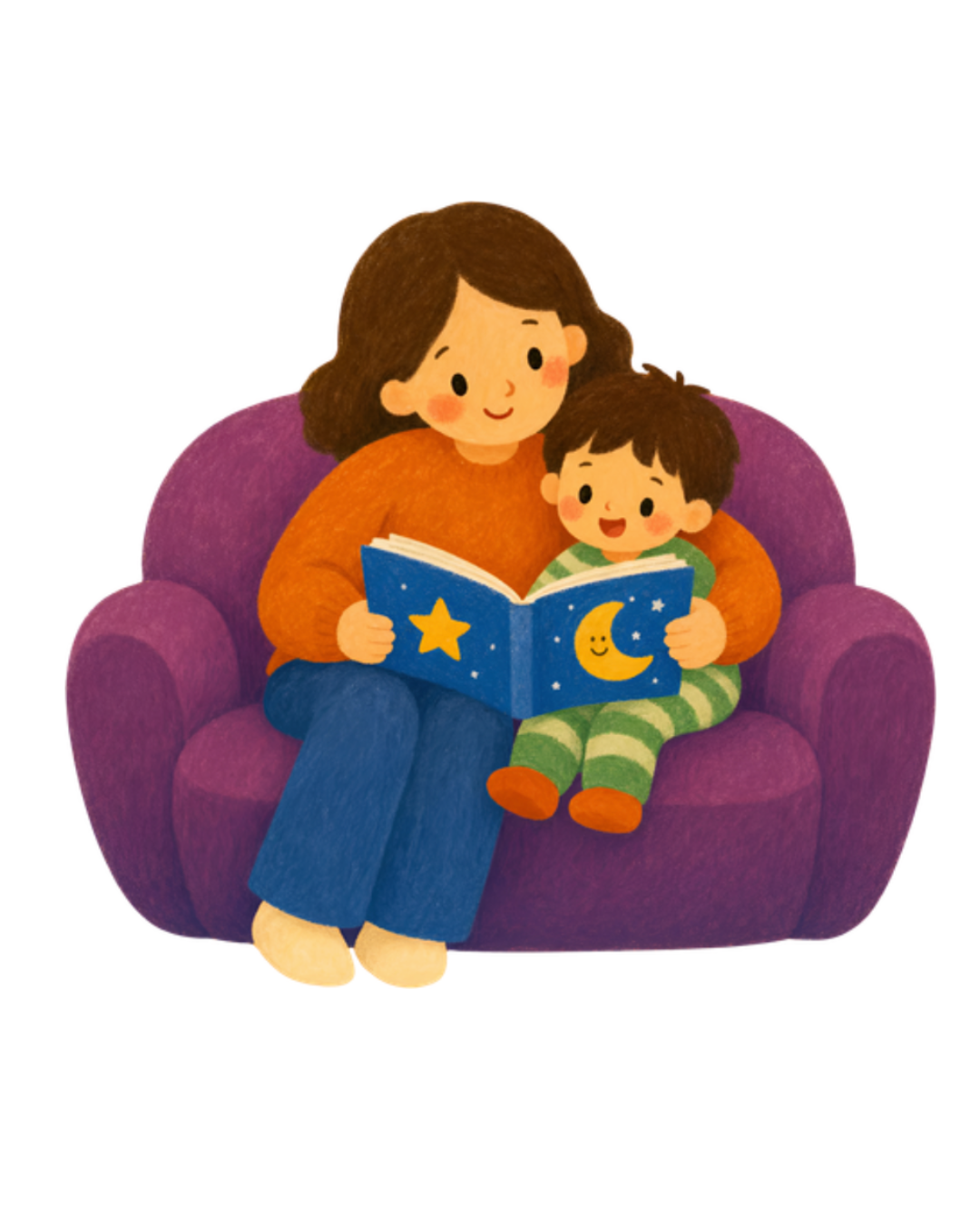
Don’t feel too committed to the actual text in the book. Instead, explore the book with your reader. Talk about what you see in the pictures and what is happening. For example, if a child is crying in the picture, talk about why, or how they feel. Make predictions together about what will happen. At the end, discuss what happened… Were your predictions correct? You can also talk about how the book relates to your child. For example, if the character had a dog, you may talk about who you know that has a dog, or how the dog compares to your dog. There are endless ways to connect your reader to the story and promote engagement.
Let your child help select books they are interested in. Finally, read to them – exposure is priceless!
With our older kids,
Don’t put pressure on them. We want them to continue to enjoy reading, and become lifelong readers. If they are struggling, some strategies to help support them are:
Take turns – shared reading is a great strategy to keep the reader motivated
Help them find books of interest. What do they want to know more about? What do they love?
Find books that are at their reading level – they should be able to read at least 90% of the text fluently. This helps to promote reading success and promote a positive experience for the reader. A Speech-Language Pathologist can help find the right level for your child.
Help fill in difficult words, and then talk about them. What does that word mean? Read the word together, then have the child read it themselves.
Read to them! They do not have to read independently all the time. You can take some pressure off your child by reading to them sometimes as well. Ask questions together while reading. For non-fiction books, ask your reader:
What do you know (about this topic)?
What do you want to know?
What did you learn?
For fiction books, have them make predictions, and discuss the characters, setting, events, and conclusion of the book.
Ensuring reading remains fun and engaging is our number one goal to create lifelong readers, and it is something that can be done at home!
When Should I Follow Up with an SLP for Literacy Support?
Children with communication disorders are at a higher risk of experiencing reading and writing difficulties, and literacy intervention and speech and language outcomes have been seen to be highly correlated (Schmitt & Tambyraja, 2015; Spracher, 2000). If your child struggles to connect sounds to letters, has difficulty sounding out words, or has trouble answering questions about a story, a Speech-Language Pathologist can help. Here are some literacy milestones to refer to if you are unsure if your child may benefit from support:
By the end of kindergarten, a child should know skills such as how to print their name, how a book works (e.g., read left to right, top to bottom), identify uppercase and lowercase letters, print upper and lower case letters, identify the first sound in words (e.g., mmm for ‘mom’).
By the end of grade one, a child should read grade-level books, print clearly, and spell some common words.
By the end of grade two, a child should read grade-level stories independently, retell a story in the correct order including important details (characters, setting, plot), recognize many words by sight, write clearly, use basic punctuation and capitalization, and spell common words correctly.
By the end of grade three, a child should have skills such as reading grade-level books with few mistakes, making story predictions, writing stories and letters, and using details in writing (American Speech-Language-Hearing Association, n.d.-a).
For more individualized strategies and support for your child, our Speech-Language Pathologists are here to help, from the early stages of discovering print concepts, to higher-level reading comprehension and expanding vocabulary through written text.
Do you have questions regarding your child’s speech and language development? Please reach out to info@ascendpeds.com, and they would be happy to help!
References:
American Speech-Language-Hearing Association. (n.d.-a). Communication development: Kindergarten through fifth grade. https://www.asha.org/public/speech/development/communicationdevelopment/
American Speech-Language-Hearing Association. (n.d.-b). Written language disorders. https://www.asha.org/practice-portal/clinical-topics/written-language-disorders/
Schmitt, M. B., & Tambyraja, S. (2015). From research to reality: Use of literacy-based targets in speech-language therapy and special education classrooms. Perspectives on Language Learning and Education, 22(3), 103–109. https://doi.org/10.1044/lle22.3.103
Spracher, M. M. (2000). Learning about literacy: SLPs play key role in reading, writing. The ASHA Leader, 5(8), 1–19. https://doi.org/10.1044/leader.SCM.05082000.1